
Commercial Tile: Different Demands
Commercial tile installation is not the same job as residential work. The tile formats are often larger, the substrate conditions vary more widely, the scheduling constraints are tighter, and the consequences of a failed floor are higher. A cracked tile in a restaurant kitchen is a health code issue. A hollow tile in a retail lobby is a liability.
We approach commercial jobs with that in mind. Before we quote a commercial project, we look at the concrete slab condition, check for moisture vapor emissions (which can cause tile adhesive failure on slabs), and ask about the business's operating hours so we can plan around them.
Commercial Settings We Work In
Salons and Spas
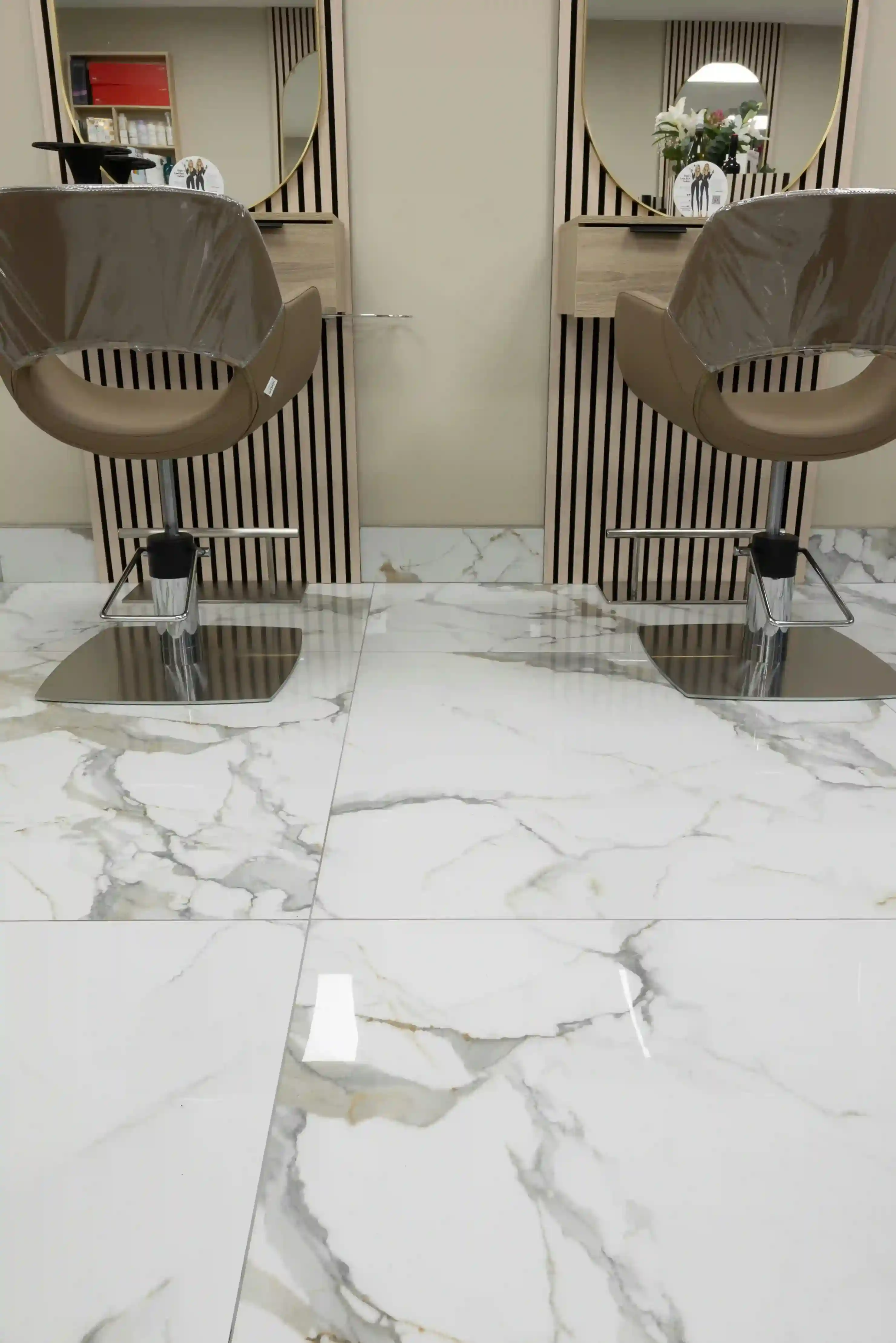
Polished porcelain and large-format marble-look tile in client-facing areas. Non-slip tile in wet processing areas. We have worked in salon spaces along the Loop 410 corridor and understand the aesthetic these businesses need.
Restaurant and Food Service
Kitchen floors require tile rated for commercial kitchen use, with a coefficient of friction that meets health code requirements for wet surfaces. Grout selection matters here too — epoxy grout in food prep areas resists bacteria and cleaning chemicals better than cement grout.
Retail and Office
High-traffic retail and office floors need tile with a PEI wear rating of 4 or 5. Layout efficiency matters in large open spaces — we plan the layout to minimize waste and ensure the pattern reads correctly from the main entrance.
Lobbies and Common Areas
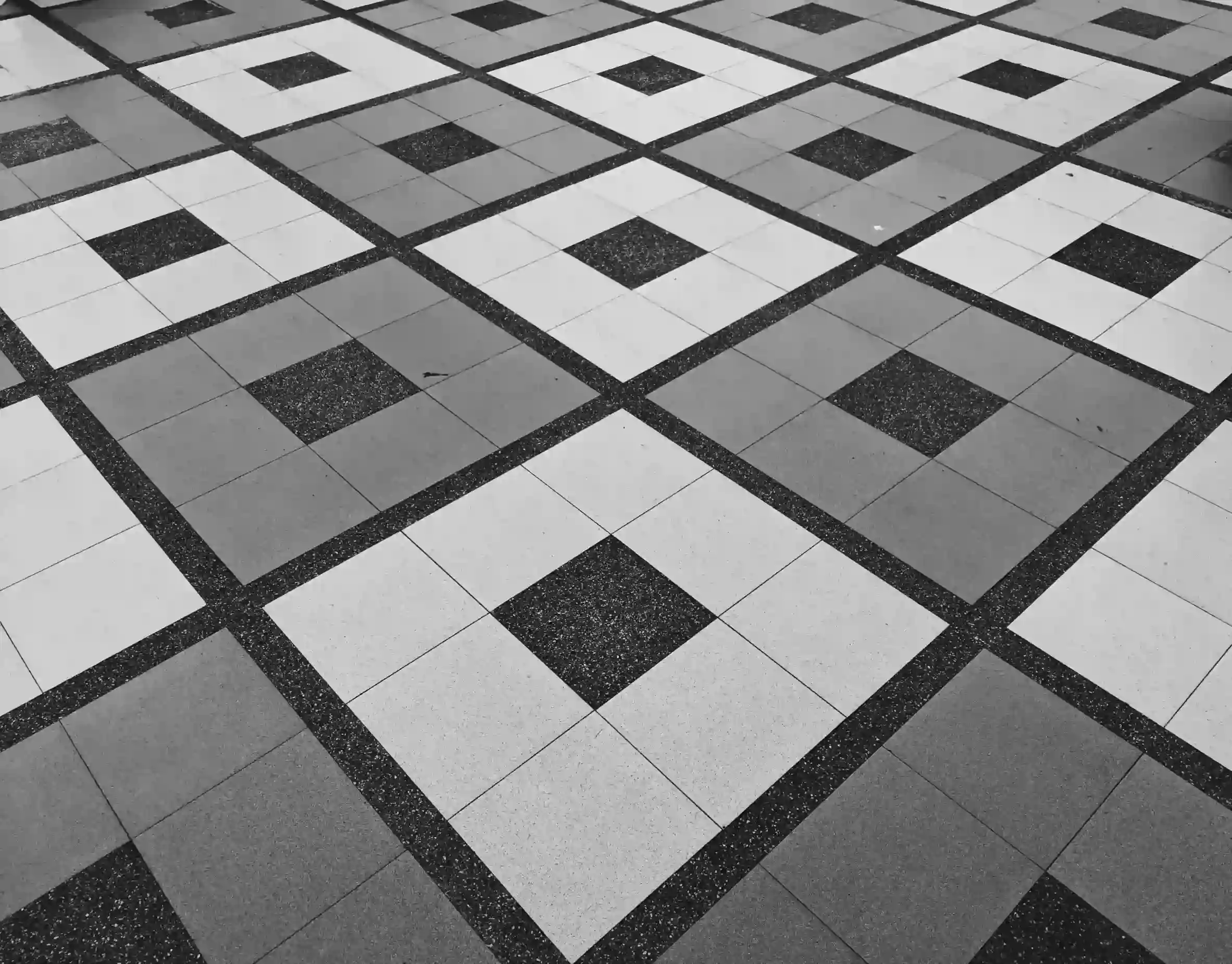
First impressions matter in a lobby. Large-format porcelain, stone-look tile, and feature patterns like the ones shown in our gallery are all options. We handle the full scope from demo through final seal.
Scheduling Around Your Business
Most commercial clients cannot shut down for multiple days. We discuss your operating schedule during the estimate and plan the installation in phases where possible. Some jobs run evenings or weekends to keep the business open during the day. We confirm the schedule in writing before work begins so there are no surprises on either side.
A Note on Moisture Testing
Concrete slabs emit moisture vapor continuously, especially in Texas where soil moisture levels can be significant. Excess moisture vapor can cause tile adhesive to fail, leading to hollow tiles or debonding. Before setting tile on any commercial concrete slab, we test for moisture vapor emission rate using calcium chloride or relative humidity probes. If the reading exceeds the mortar manufacturer's limit, we use a moisture vapor barrier membrane before setting tile. This adds time and cost but prevents a much more expensive failure later.